
Case study · Microbial genomics
Comparative genomics and phylogenomics of Fervidobacterium
How complete bacterial genomes, public genomes and high-quality MAGs were assembled, annotated and compared to resolve species relationships, explore genome evolution and identify biologically relevant genomic features.
Published research case study. This work was not a commercial client project.
At a glance
A genome-scale framework for a difficult bacterial genus
new complete Fervidobacterium genomes generated and described.
genomes, MAGs and a single-cell genome compared in the broader analysis.
gene clusters included in the Roary pan-genome comparison.
species and subspecies clusters resolved by genome-based phylogenomics.
The challenge
When classical taxonomy and genome-wide evidence do not fully agree
Fervidobacterium is a genus of thermophilic anaerobic bacteria with evolutionary and biotechnological interest, but its taxonomic structure was poorly resolved. Horizontal gene transfer, limited complete genomes and inconsistent historical classifications made it difficult to determine how the available strains were related.
The analysis therefore had to combine de novo genome generation with several independent comparative and phylogenomic approaches rather than rely on a single marker or similarity metric.
Questions addressed
Which strains belong to the same genome species? Are existing species names consistent with genome-wide relationships? How variable is the pan-genome? Which genomic features distinguish divergent lineages? What metabolic and biotechnological functions can be inferred from the genomes?
Data and analytical strategy
From sequencing reads to comparative-genomics interpretation
01 · Assembly
Hybrid genome assembly
Oxford Nanopore and Illumina reads were quality filtered and combined in hybrid assemblies, producing complete single-contig chromosomes for the six newly sequenced strains.
02 · Annotation
Genome annotation
PGAP and Prokka were used to identify coding regions and structural RNAs, creating consistent annotated genomes for downstream comparison.
03 · Taxonomy
ANI, dDDH and phylogenomics
16S rRNA phylogeny, OrthoANI and TYGS genome-based phylogeny/dDDH provided complementary evidence for species and subspecies placement.
04 · Comparison
Pan-genome and orthology
Roary, anvi’o and OrthoFinder were used to examine shared, accessory and strain-specific gene content across the genus.
05 · Genome features
Mobility and functional mining
Genomic islands, horizontal-transfer regions, CRISPR-Cas systems, prophages, COG categories, KEGG pathways and CAZy families were explored.
06 · Interpretation
Integrated biological conclusions
Results from independent genome-wide analyses were reconciled into a taxonomic and evolutionary interpretation and publication-ready figures.
Figures and analysis outputs
Explore the genome-wide evidence
Six representative outputs show the range of analyses used in this study. Click any figure to open the full-resolution image.


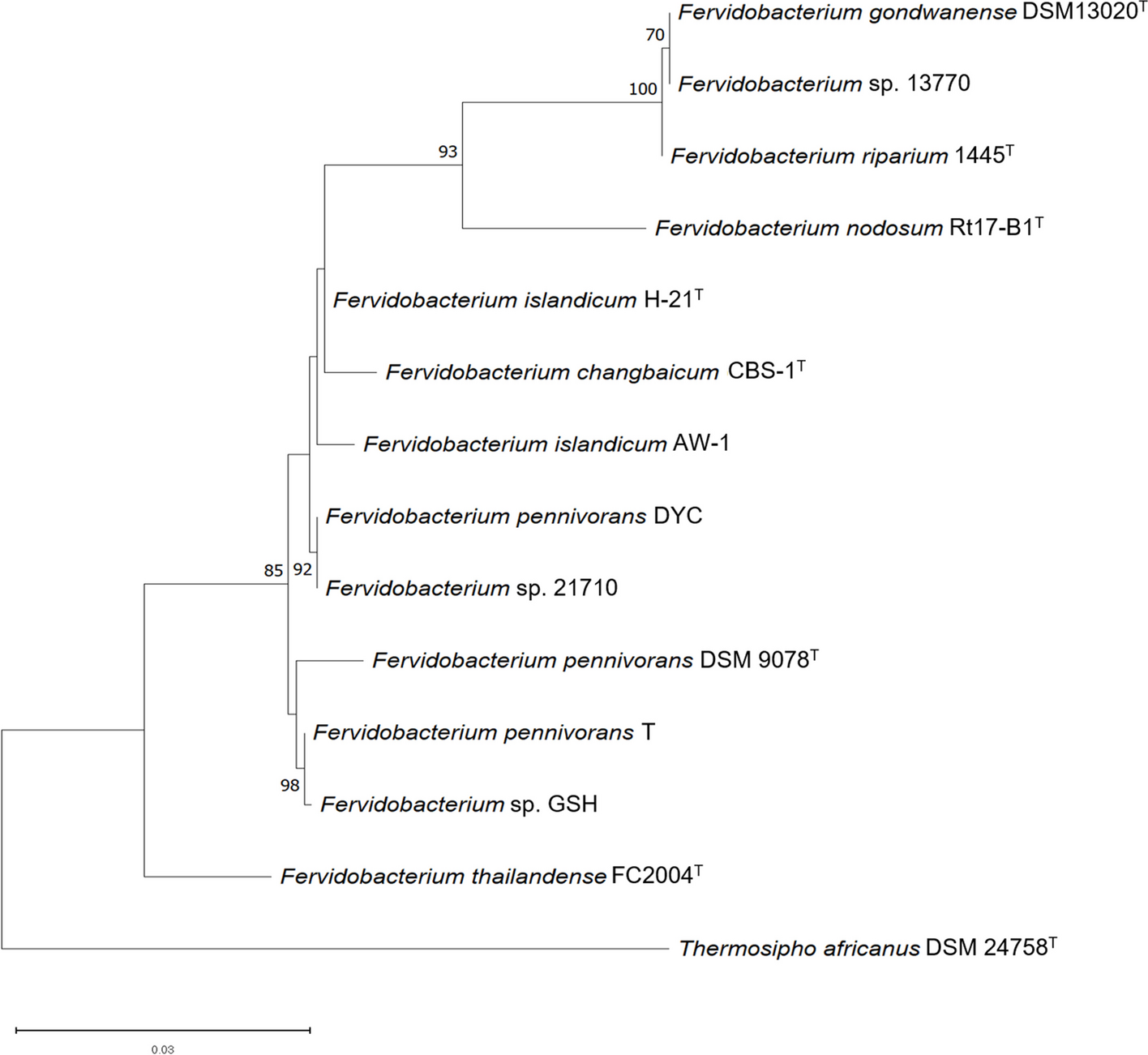

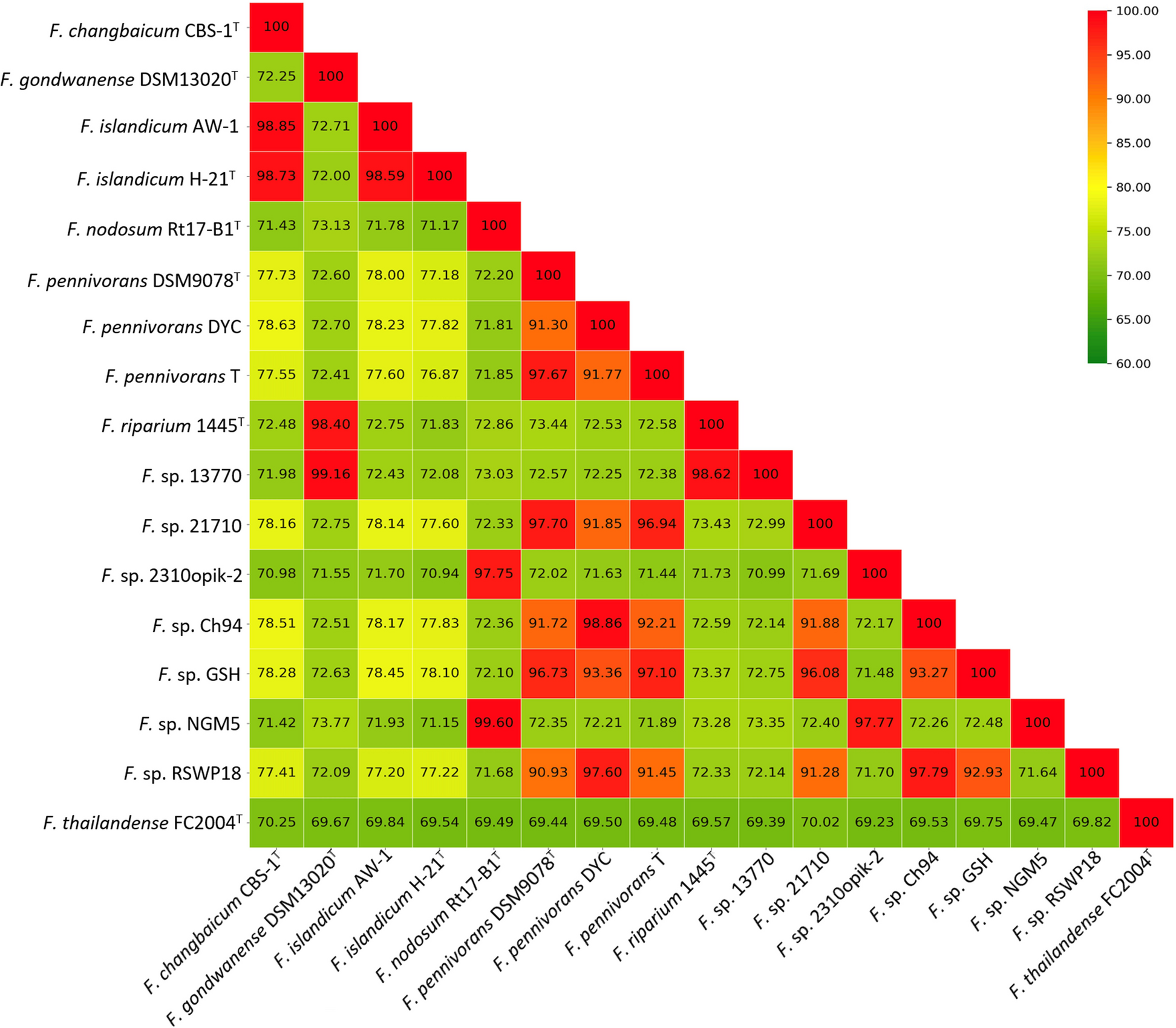
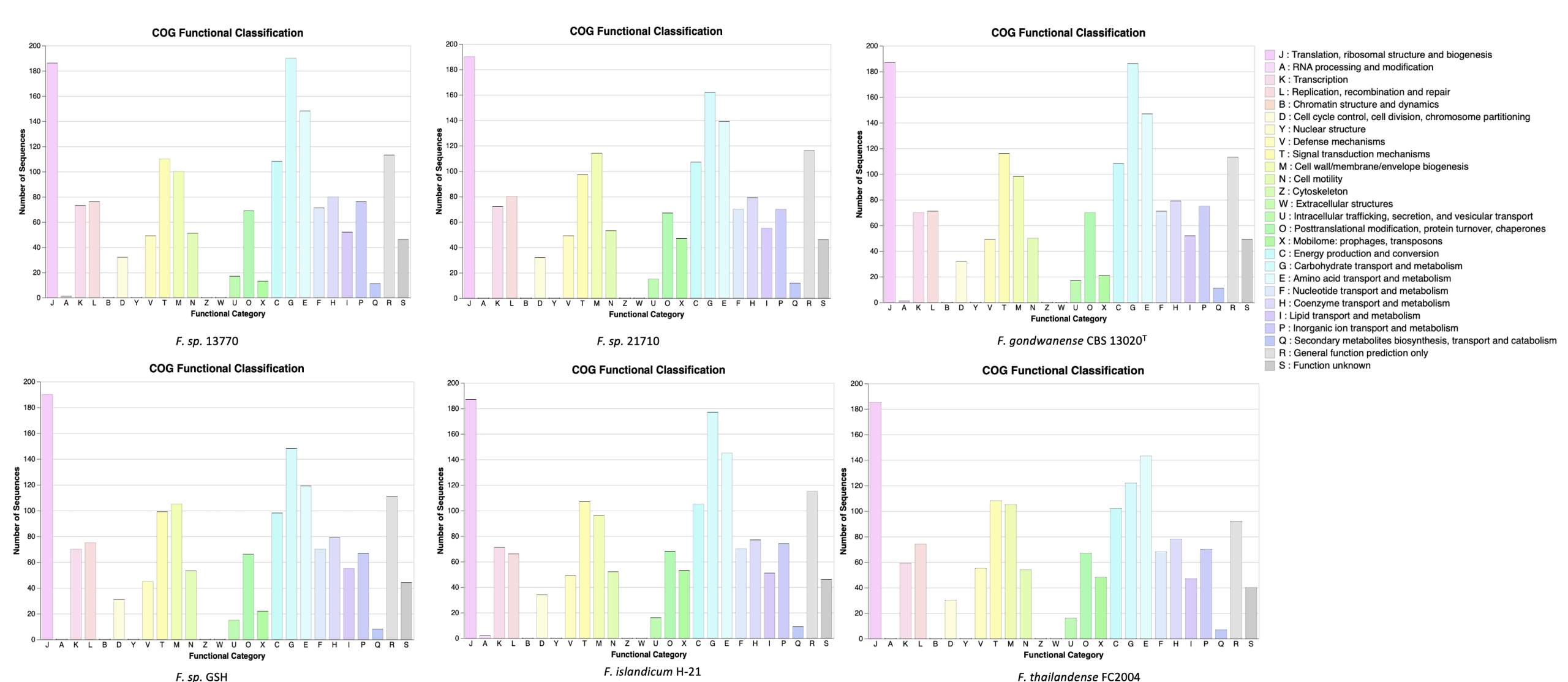
The sixth output is Supplementary Figure S4 because it adds functional annotation to the assembly, pan-genome, phylogenetic and ANI outputs already shown. Figures: Javier-López et al., BMC Genomics (2024), CC BY 4.0.
Key findings
What the analysis revealed
Taxonomic relationships were revised
Multiple genome-wide methods supported reclassification of several strains, including placing F. riparium with F. gondwanense and F. changbaicum with F. islandicum, while strain DYC formed a separate genome species.
The pan-genome was highly diverse
Approximately 44% of the Roary pan-genome consisted of cloud genes, consistent with a genetically diverse genus and substantial strain-specific content.
F. thailandense stood apart
This lineage showed a distant phylogenomic position and an unusually high burden of transposases, CRISPR clusters, pseudogenes and horizontally transferred regions.
Functional potential was mapped
COG, KEGG and CAZy analyses were used to compare metabolic potential and identify candidate functions relevant to ecology and biotechnology.
Independent methods converged
16S rRNA phylogeny, TYGS/dDDH, OrthoANI and pan-genome relationships produced complementary and broadly congruent clustering.
Results were publication-ready
The work produced complete genomes, curated annotations, comparative matrices, phylogenomic trees, functional summaries and figures suitable for peer-reviewed publication.
What this demonstrates
Capabilities relevant to similar microbial genomics projects
This published project illustrates the type of analysis Tailoredomics can apply to bacterial or archaeal genome datasets, adapting tools and comparisons to the biological question and available data.
Research provenance
Peer-reviewed evidence, not a mock analysis
This case study is based on the peer-reviewed BMC Genomics article Comparative genomics of Fervidobacterium: a new phylogenomic landscape of these wide-spread thermophilic anaerobes.
Tailoredomics founder Rubén Javier-López was first and corresponding author and contributed to conceptualization, phylogenetic and genome analysis, data curation, manuscript preparation and visualization.
Typical deliverables for a comparable client project
Depending on scope and data quality, a comparable analysis can include quality-controlled reads, assembled genomes, annotation files, ANI/dDDH tables, phylogenomic trees, pan-genome matrices, functional-analysis tables, publication-ready visualizations and a documented methods/results report.
Exact outputs are agreed before the project starts and depend on the research question and available data.
Have a similar project?
Tell us what data you have and what you want to learn from it.
We can review your sequencing files, existing assemblies or comparative-genomics question and define a practical analysis scope before the work begins.