If you have assembled a bacterial or archaeal genome, the next question is usually straightforward: which annotation pipeline should you use?
Three of the most widely used options are Prokka, NCBI PGAP, and RAST. All three aim to identify genes and functional elements in microbial genomes, but they differ in speed, output style, level of standardization, ease of use, and suitability for different goals.
Some tools are better for fast local annotation and iterative analysis. Others are better for standardized submissions or more conservative, curated outputs. Choosing the right one depends on what you want to do next with the genome: explore it quickly, compare multiple strains, prepare a publication, or submit it to a public database.
In this guide, we compare Prokka, PGAP, and RAST in practical terms so you can choose the annotation workflow that best fits your project.
If you need help with assembly, annotation, comparative genomics, or gene mining, you can also explore our Microbial Genomics Services.
What do genome annotation pipelines actually do?
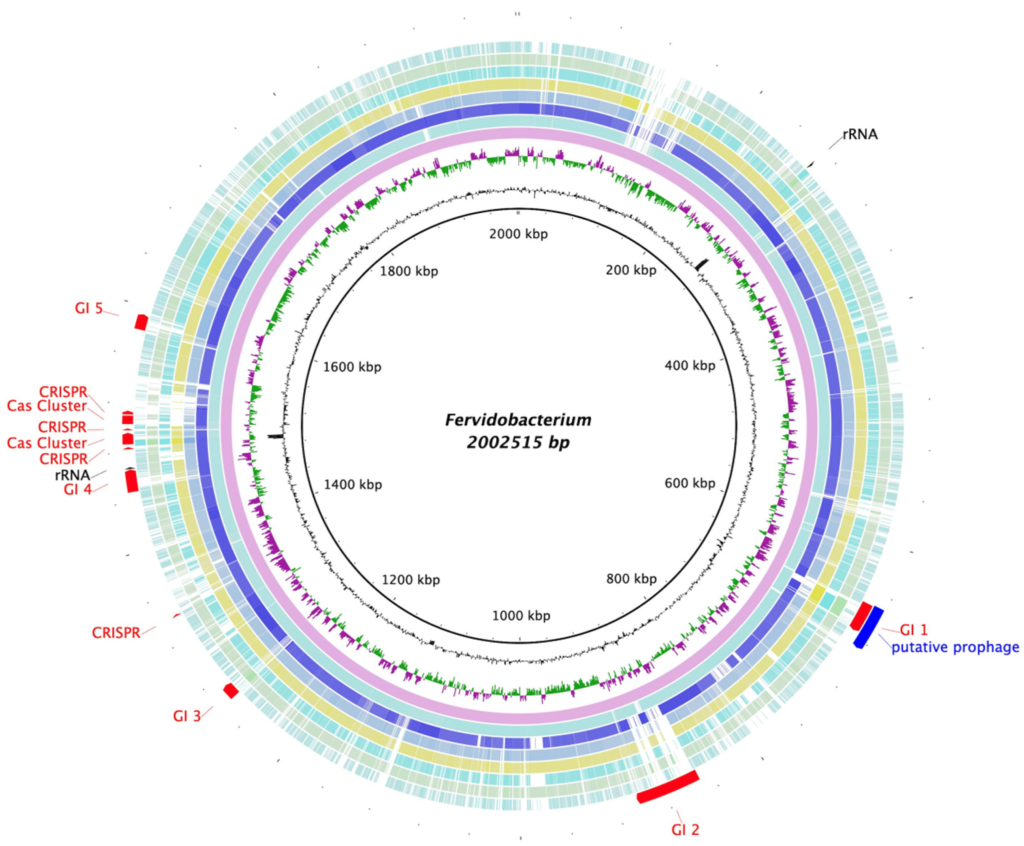
Genome annotation tools take an assembled genome and try to identify biologically meaningful features such as:
- coding sequences (CDSs)
- tRNAs
- rRNAs
- non-coding RNAs
- pseudogenes
- gene names and product descriptions
- functional categories and pathways
In practice, annotation is not just about finding open reading frames. It is also about assigning useful biological meaning to those predictions.
A good annotation pipeline helps transform a raw FASTA file into something interpretable and usable for downstream analysis, comparative genomics, and publication.
If you want a broader introduction first, see our guide on what genome annotation is.
Quick answer: when should you use each one?
If you want a short practical summary:
- Use Prokka if you want fast, local, flexible microbial genome annotation for research workflows and exploratory analysis.
- Use PGAP if you want a more standardized and conservative annotation, especially if your goal is NCBI-compatible submission or higher annotation consistency.
- Use RAST if you want a user-friendly platform with subsystem-based functional interpretation and a straightforward web-based workflow.
That is the short version. The rest of this post explains the trade-offs.
Prokka: fast and practical for local annotation
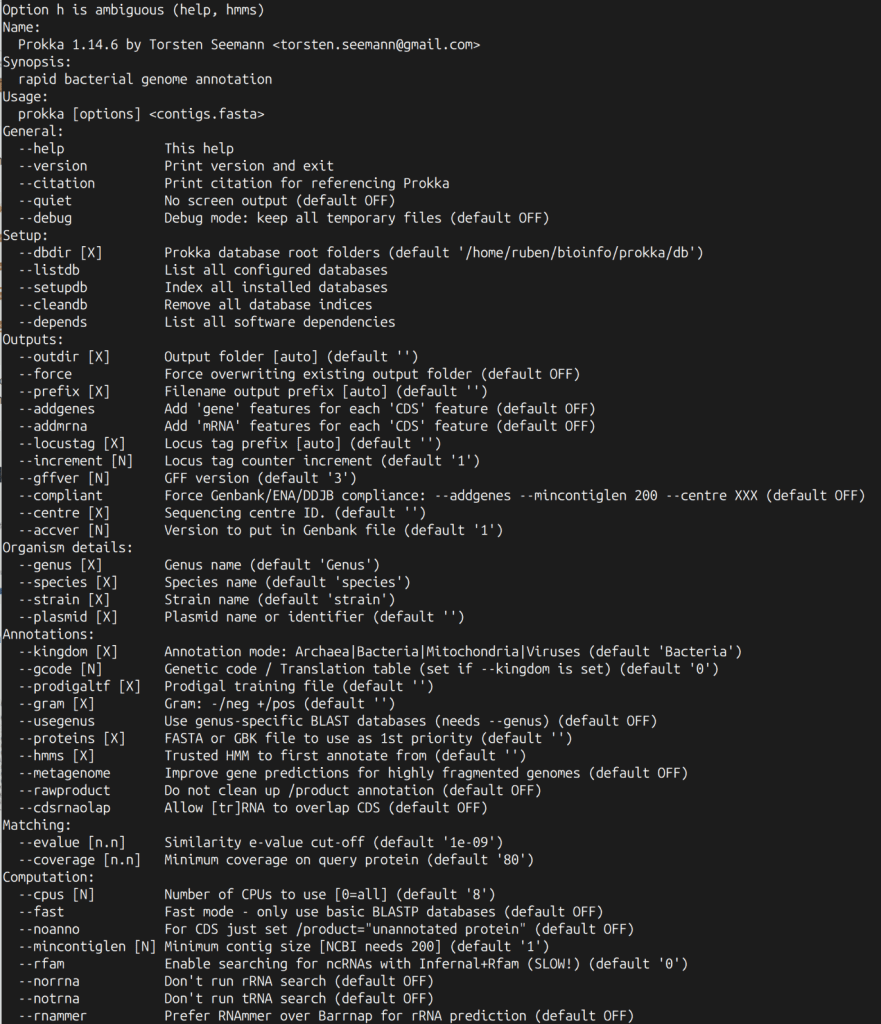
Prokka became popular because it is fast, easy to run locally, and designed specifically for prokaryotic genome annotation.
It predicts genes and RNAs, assigns product names using bundled or custom databases, and generates outputs that are convenient for downstream analysis.
Strengths of Prokka
- fast and lightweight
- easy to install and run locally
- widely used in bacterial genomics workflows
- convenient outputs for comparative genomics
- easy to annotate multiple genomes in a consistent way
- supports custom databases
For many research projects, Prokka is the first annotation tool people try because it is practical and integrates well into assembly-to-analysis pipelines.
Limitations of Prokka
- functional annotations can be less conservative than PGAP
- naming conventions may be less standardized
- output quality depends strongly on the database context
- public-database submission workflows often require additional steps
Best use cases for Prokka
Prokka is especially useful when:
- you want quick annotation of one or many bacterial genomes
- you are building a local pipeline
- you want outputs for pangenome or comparative analysis
- you need flexibility and speed more than submission-grade standardization
For iterative microbial genomics work, Prokka remains very practical.
PGAP: more standardized and conservative
PGAP, the Prokaryotic Genome Annotation Pipeline from NCBI, is designed to provide a more standardized annotation framework.
Compared with Prokka, PGAP is often seen as more conservative and more aligned with public database expectations.
Strengths of PGAP
- strong standardization
- good fit for genomes intended for NCBI submission
- more conservative annotation style
- widely trusted for public-facing genome records
- useful when consistency and formal annotation matter
Limitations of PGAP
- can be heavier and less convenient than Prokka for quick local iteration
- setup and execution may feel more demanding
- less flexible for fast exploratory annotation across many genomes
- slower workflow for some users
Best use cases for PGAP
PGAP is a strong choice when:
- you are preparing a genome for public deposition
- you want a more conservative annotation
- you care about standardized outputs
- you want closer alignment with NCBI expectations
If your downstream goal includes formal submission or a more rigorous standardization layer, PGAP is often the safer choice.

RAST: user-friendly and function-oriented
RAST is widely known for its accessible interface and subsystem-based annotation framework.
Instead of only assigning individual genes, RAST also emphasizes functional interpretation in the context of biological systems and pathways.
Strengths of RAST
- user-friendly web-based workflow
- convenient for researchers who prefer not to run everything locally
- subsystem-oriented functional interpretation
- useful for rapid biological overview
- accessible for teaching, early-stage exploration, and collaborative projects
Limitations of RAST
- less convenient for large-scale local automation
- may be slower for batch-heavy workflows
- some users prefer more direct control than a web-based interface allows
- output structure may be less convenient than Prokka for some comparative-genomics pipelines
Best use cases for RAST
RAST is especially useful when:
- you want an accessible annotation workflow
- you want quick functional interpretation through subsystems
- you are exploring a genome rather than building a large automated pipeline
- ease of use matters more than maximum local control
Prokka vs PGAP vs RAST: key differences
Here is the practical comparison.
1. Speed
- Prokka is usually the fastest and most convenient for rapid local annotation
- PGAP is typically heavier and more standardized
- RAST can be convenient, but not always the fastest option for many genomes
If speed and throughput matter most, Prokka usually wins.
2. Standardization
- PGAP is strongest when annotation consistency and submission-style outputs matter
- Prokka is practical but less formalized
- RAST is useful, but not usually the first choice for highly standardized submission workflows
If standardization matters most, PGAP usually has the edge.
3. Ease of use
- RAST is often the easiest for users who want a web-based workflow
- Prokka is easy for command-line users
- PGAP can require more setup and patience
If accessibility matters most, RAST is attractive.
4. Flexibility
- Prokka is very flexible for local pipelines and custom databases
- PGAP is less oriented toward quick flexible iteration
- RAST is convenient, but not the most flexible option for heavy local automation
If pipeline flexibility matters most, Prokka is often the best choice.
5. Functional interpretation
- RAST is particularly strong for subsystem-based biological interpretation
- PGAP provides robust annotation but is not primarily designed as a subsystem-exploration platform
- Prokka is very useful for structural and functional annotation, but downstream interpretation often benefits from additional tools
If your immediate goal is an intuitive biological overview, RAST can be very attractive.
Comparison table
Feature comparison
Prokka
- fast local annotation
- good for many genomes
- flexible and easy to integrate
- strong for research pipelines and comparative workflows
PGAP
- more standardized
- better suited to NCBI-oriented workflows
- conservative annotations
- useful for formal genome records
RAST
- accessible interface
- subsystem-based interpretation
- convenient for functional overview
- good for users who want less command-line work
Which one is best for bacterial genome projects?
There is no universal winner. The best choice depends on your project.
Use Prokka if:
- you want speed
- you want to annotate many genomes locally
- you are building a comparative genomics pipeline
- you want easy downstream use in pangenome or gene-content analysis
Use PGAP if:
- you want a more formal and conservative annotation
- you are preparing a genome for public submission
- you want stronger standardization across records
Use RAST if:
- you want an accessible, function-oriented workflow
- you value subsystem-level biological interpretation
- you want a quick overview without building a full local pipeline
Can you use more than one annotation tool?
Yes, and in many cases that is a very reasonable strategy.
Some researchers use:
- Prokka for fast local annotation and downstream comparative work
- PGAP for formal or submission-oriented annotation
- RAST for additional functional interpretation
This can be especially useful when:
- you want to compare annotations
- you need more confidence in gene naming
- you want both flexible local outputs and conservative public-facing records
You do not always need to choose only one forever. You may choose one as your main workflow and use another as a complementary reference.
What if the annotation still feels incomplete?
No annotation pipeline is perfect.
This is especially true when working with:
- draft genomes
- fragmented assemblies
- non-model organisms
- unusual metabolic traits
- hypothetical proteins
- novel taxa
In these cases, additional downstream analyses are often needed, such as:
- eggNOG-based functional annotation
- KEGG mapping
- domain searches
- resistance-gene screening
- virulence-factor screening
- comparative genomics
- manual inspection of genes of interest
Annotation is often the starting point, not the endpoint.
Final thoughts
Prokka, PGAP, and RAST are all useful microbial genome annotation tools, but they solve slightly different problems.
- Prokka is usually the best choice for fast, flexible, research-oriented local annotation.
- PGAP is often the strongest option when standardization and public submission matter.
- RAST is valuable when ease of use and subsystem-based interpretation are priorities.
If your goal is fast exploratory analysis of bacterial genomes, Prokka is often the most convenient starting point. If your goal is a more formal annotation record, PGAP may be the better fit. If you want a function-oriented overview with minimal local setup, RAST can be very useful.
If you need help choosing an annotation workflow, annotating microbial genomes, or combining annotation with comparative genomics and gene mining, explore our Microbial Genomics Services or contact us for a project-specific consultation.
Related reading
- What Is Genome Annotation? A Complete Guide to Understanding and Annotating Genomes
- Bacterial Genome Assembly Pipeline: From Raw Reads to Annotated Genome
- How to Assemble a Bacterial Genome from Nanopore Reads
- Microbial Genomics Services