Introduction
Choosing the correct RNA-seq sequencing depth is one of the most important decisions when designing a transcriptomics experiment. Sequencing too few reads can reduce the ability to detect differentially expressed genes, while excessive sequencing may waste resources without improving biological insight.
RNA sequencing allows researchers to quantify gene expression across the entire transcriptome. However, the reliability of expression estimates depends strongly on the number of reads obtained per sample.
In this guide, we explain how sequencing depth influences RNA-seq experiments and provide practical recommendations for microbial and eukaryotic transcriptomics studies.
If you need help analyzing RNA-seq datasets, our Transcriptomics Services provide complete pipelines from raw FASTQ files to differential gene expression and functional interpretation.
What Is RNA-Seq Sequencing Depth?
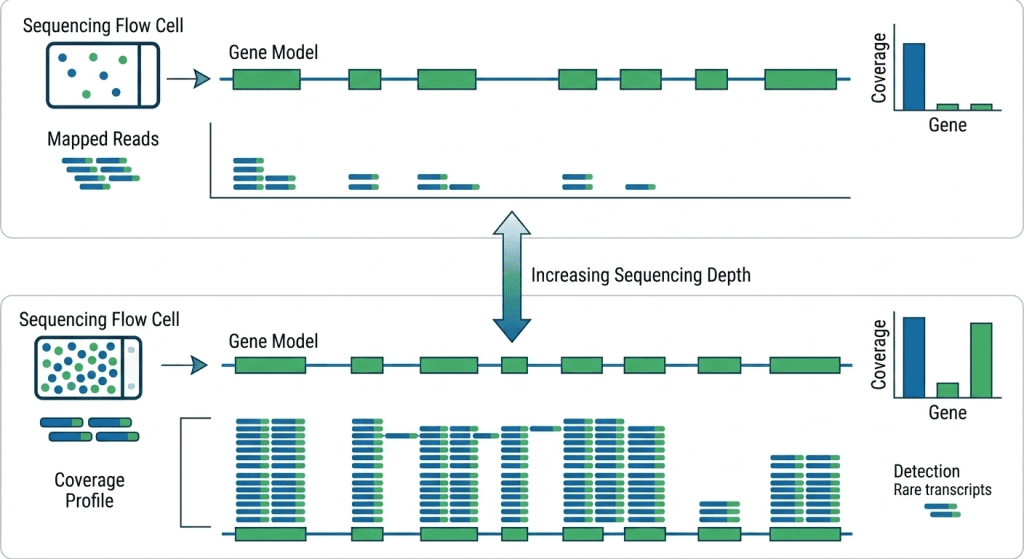
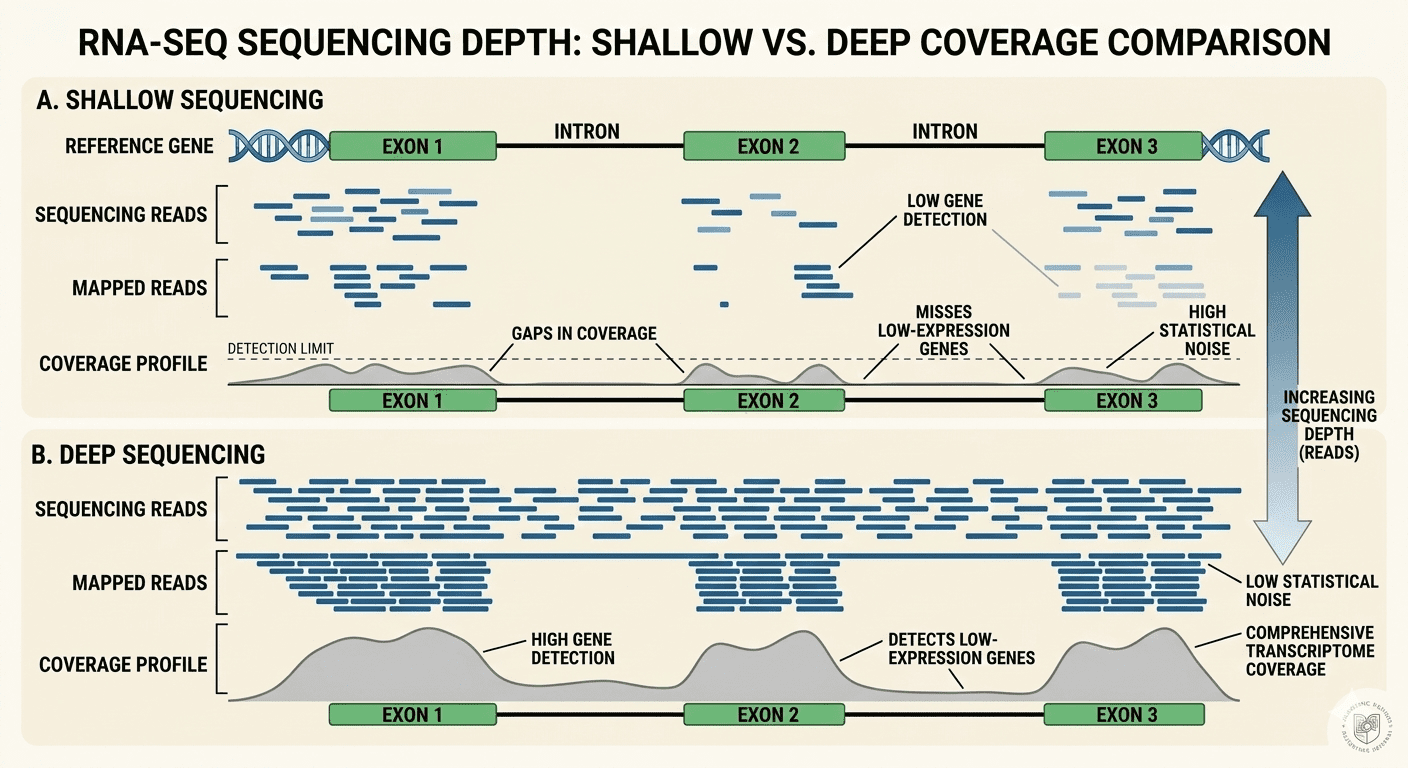
Sequencing depth refers to the total number of sequencing reads obtained for a sample. In RNA-seq experiments, deeper sequencing means that more RNA fragments are captured and sequenced.
Higher sequencing depth improves the ability to:
- detect low-abundance transcripts
- estimate expression levels more accurately
- identify subtle differential gene expression
- capture rare isoforms or transcripts
However, sequencing depth must be balanced with experimental design, biological replicates, and project budget.
Typical RNA-Seq Read Depth Recommendations
The optimal number of reads depends on the organism and the goals of the experiment. Below are general guidelines commonly used in transcriptomics studies.
Microbial transcriptomics
- 5–10 million reads per sample for basic expression profiling
- 10–20 million reads for robust differential expression analysis
Eukaryotic transcriptomes
- 20–30 million reads for standard differential expression
- 50+ million reads for isoform-level analysis
Single-cell RNA-seq
- Typically lower depth per cell but many cells sequenced simultaneously
These numbers are not strict rules but useful starting points for experimental planning.
Factors That Influence RNA-Seq Sequencing Depth
Transcriptome complexity
Organisms with larger and more complex transcriptomes require deeper sequencing to capture the full range of expressed genes.
Experimental goals
Experiments focused on differential gene expression may require less depth than studies aiming to discover rare transcripts.
Number of biological replicates
Increasing biological replicates often improves statistical power more than increasing sequencing depth.
RNA quality
Low-quality RNA samples may require additional sequencing to compensate for degraded transcripts.
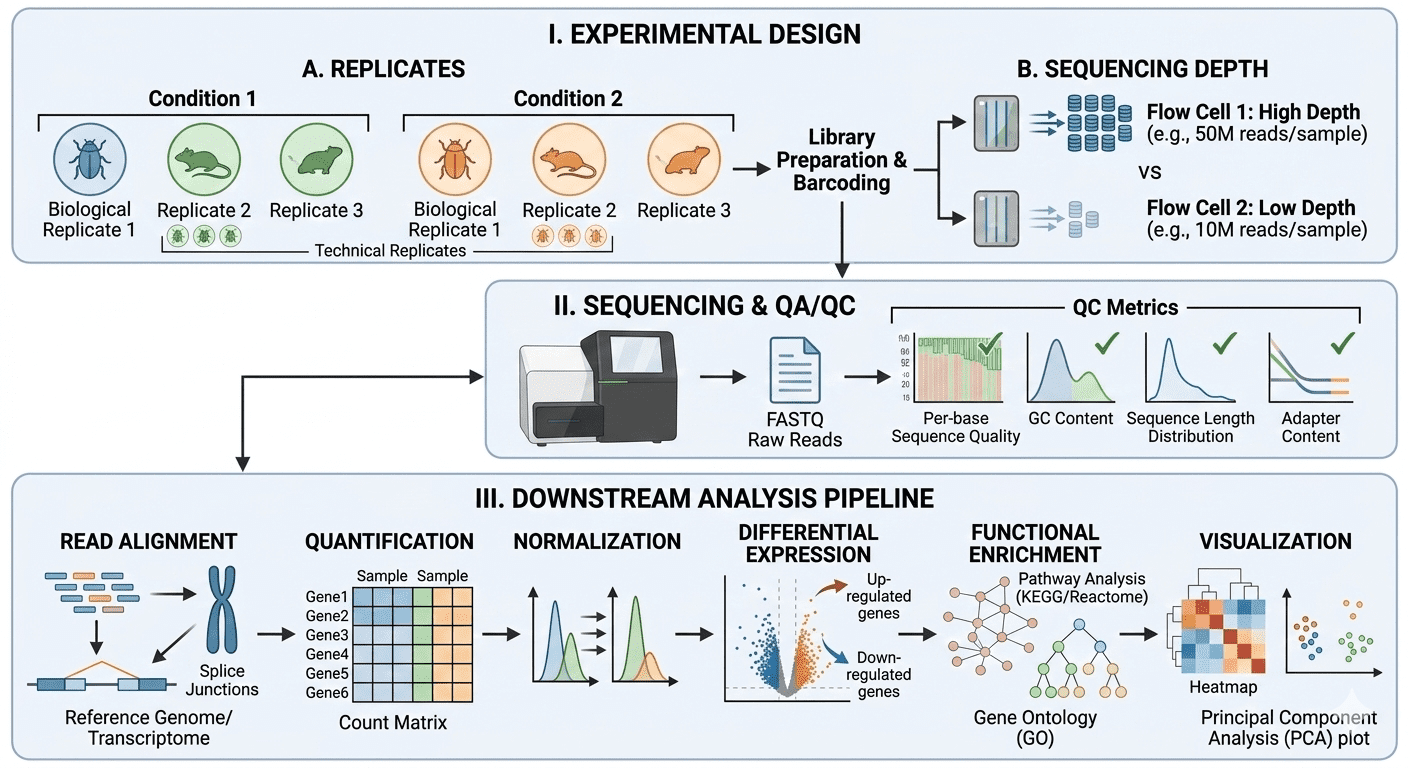
Sequencing Depth vs Biological Replicates
A common mistake in RNA-seq experiments is prioritizing sequencing depth over replication.
In most cases, increasing the number of biological replicates provides greater statistical power for differential expression analysis than simply increasing read depth.
For example:
- 3–5 biological replicates per condition are typically recommended
- moderate sequencing depth combined with replication often yields the most reliable results
Sequencing Depth and Differential Gene Expression
Sequencing depth directly affects the ability to detect differentially expressed genes. When read counts are too low, statistical models may fail to distinguish real biological changes from noise.
RNA-seq differential expression analysis tools such as DESeq2 and edgeR rely on accurate count estimates, which improve with sufficient sequencing depth.
If you want to understand how these statistical workflows operate, see our guide to the RNA-seq data analysis pipeline.
Cost Considerations
Sequencing depth is also a financial decision. More reads increase sequencing costs and data storage requirements.
When designing experiments, researchers must balance:
- sequencing depth
- number of samples
- number of biological replicates
- project budget
Optimizing this balance is essential for generating reliable transcriptomics data without unnecessary costs.
When to Use Professional RNA-Seq Analysis Services
RNA-seq experiments generate large and complex datasets that require specialized bioinformatics expertise.
Professional RNA-seq analysis services can help with:
- experimental design and sequencing depth recommendations
- quality control and preprocessing
- differential gene expression analysis
- functional enrichment and pathway analysis
At Tailoredomics, our Transcriptomics Services support RNA-seq projects from raw sequencing data to publication-ready results.
Final Thoughts
The optimal RNA-seq sequencing depth depends on the biological question, transcriptome complexity, and experimental design. By carefully balancing sequencing depth with replication and study goals, researchers can generate high-quality transcriptomics data while controlling costs.