In the world of microbial ecology and life sciences, few concepts generate as much confusion as microbiome and microbiota.
These two terms are often used interchangeably — even in scientific literature — yet they describe distinct aspects of microbial communities.
Understanding the difference between microbiome vs microbiota is fundamental to interpreting microbiome analysis results, designing better experiments, and applying microbial data in biotechnology, health, or environmental research.
In this post, Tailoredomics explains what microbiome vs microbiota means, how they’re related, and why this distinction matters for accurate and insightful microbiome analyses you can conduct with us!
What Is the Microbiota?
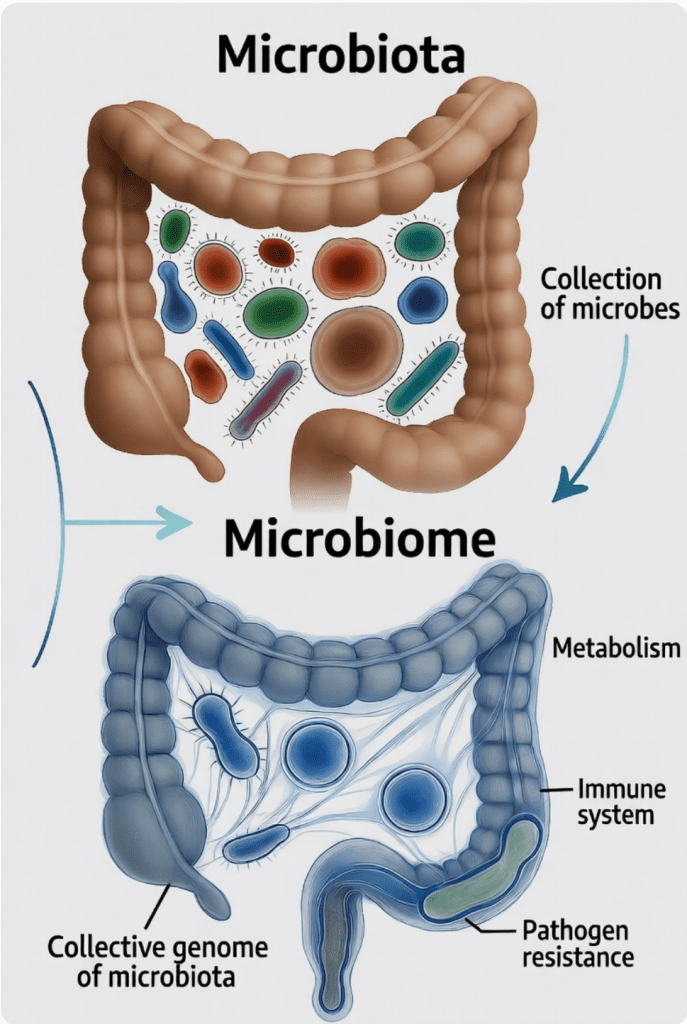
The microbiota refers to the collection of microorganisms — bacteria, archaea, viruses, fungi, and protists — that inhabit a specific environment. It represents the living community itself.
For example:
- The gut microbiota includes all microbial species residing in the intestinal tract.
- The skin microbiota comprises microbes that live on human skin.
- The soil microbiota represents the microbial ecosystem that sustains plant growth and nutrient cycling.
When scientists talk about microbiota composition, they’re describing which species are present and how abundant each one is.
In short: Microbiota = the microbial organisms themselves.
What Is the Microbiome?
The microbiome goes a step further. It refers to the microorganisms and their genetic material, metabolic products, and interactions with their environment.
A widely accepted definition is:
“The microbiome comprises the entire habitat, including the microorganisms (microbiota), their genomes, and the surrounding environmental conditions.”
This means the microbiome is not just who is there — it’s also what they can do.
So while the microbiota focuses on taxonomy, the microbiome encompasses function — gene expression, biochemical activity, and ecological roles.
In short: Microbiome = microbiota + their genes + their environment.
A Bit of History: How These Terms Emerged
The term microbiota has been used since classical microbiology, long before sequencing technologies existed. It described microbial communities identified by culturing.
In contrast, microbiome was first introduced by Nobel laureate Joshua Lederberg to emphasize the genomic and ecological relationships between microbes and their hosts.
With the rise of metagenomics, scientists could analyze all microbial DNA directly from environmental or biological samples — making “microbiome” the go-to term for these studies. Already in a metagenomics related project? Check our metagenomics services and contact us!
Microbiome vs Microbiota: The Key Differences Explained
| Aspect | Microbiota | Microbiome |
|---|---|---|
| Definition | The community of microorganisms in a given environment | The microorganisms plus their genes and surrounding environment |
| Focus | Taxonomy and composition | Function and genetic potential |
| Study Methods | 16S rRNA sequencing, culture-based methods | Metagenomics, metatranscriptomics, metabolomics |
| Data Type | Species abundance | Genes, pathways, and functions |
| Example | “The gut microbiota shifted after antibiotic treatment.” | “The gut microbiome lost SCFA biosynthesis pathways after antibiotics.” |

Microbiota vs microbiome. Key differences
Why Knowing the Difference Between Microbiome and Microbiota Matters
The difference between microbiome vs microbiota has practical implications for both research and industry applications:
- Experimental Design
- Studying composition? → Use 16S rRNA sequencing.
- Exploring functionality? → Use shotgun metagenomics or metatranscriptomics.
- Data Interpretation
- Two samples with similar microbiota may have very different microbiomes if gene content differs.
- Functional predictions require genomic context.
- Precision in Communication
- Using the right term improves clarity in scientific writing, grant proposals, and bioinformatics reporting.
- Real-World Applications
- In biotechnology, medicine, or environmental monitoring, understanding the microbiome’s functional potential is key to developing microbial solutions and therapies.
How Are They Studied?
Studying the Microbiota
Techniques like 16S rRNA sequencing identify which bacterial or archaeal species are present.
Typical workflow:
- DNA extraction
- PCR amplification of 16S regions
- Sequencing and bioinformatics processing (QIIME2, DADA2, Phyloseq)
- Calculation of alpha diversity and beta diversity metrics
This provides insight into community structure but limited information about function.
Studying the Microbiome
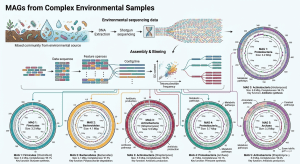
Shotgun metagenomics captures all genetic material from a sample — including bacteria, archaea, viruses, and fungi.
This allows researchers to:
- Identify functional genes and pathways
- Assemble genomes (MAGs)
- Link taxonomic and metabolic data
For deeper insights, metatranscriptomics, metaproteomics, and metabolomics reveal active gene expression, proteins, and metabolites — the full functional landscape of the microbiome. And if you are wondering about differences between shotgut metagenomics and 16S rRNA sequencing, check our dedicated post on this topic!
Beyond the Gut: Microbiomes Everywhere
Although the human gut microbiome is the most studprofilingied, the concept applies across ecosystems:
- Oral microbiome — influences oral and systemic health.
- Skin microbiome — shapes immunity and disease susceptibility.
- Plant microbiome — enhances nutrient uptake and stress tolerance.
- Marine microbiome — regulates carbon and nitrogen cycles globally.
Each environment hosts its own microbiota, but only through microbiome analysis can we understand their ecological and functional contributions.
The Functional Potential: Why the Microbiome Matters
The microbiome concept revolutionized biology because it connects microbial identity to activity.
By exploring microbial genomes and pathways, researchers can predict:
- Metabolic capacities (e.g., SCFA, vitamin, or toxin production)
- Ecological roles (e.g., carbon cycling, methane oxidation)
- Host effects (e.g., immune modulation, neurotransmitter synthesis)
Modern bioinformatics pipelines (e.g., HUMAnN, MetaPhlAn, MEGAN, EggNOG, KEGG) enable annotation and interpretation of these functions.
At Tailoredomics, we use these tools to provide actionable insight from your sequencing data — helping you move from who is there to what they do. Check out our metagenomics and microbiome profiling services!
Microbiome vs Microbiota. Why the Confusion Persists
Even in peer-reviewed papers, researchers sometimes mix the two terms because:
- Both are deeply interconnected.
- Many studies combine taxonomic and functional analyses.
- “Microbiome” has become a popular umbrella term in media and academia.
Still, for precision:
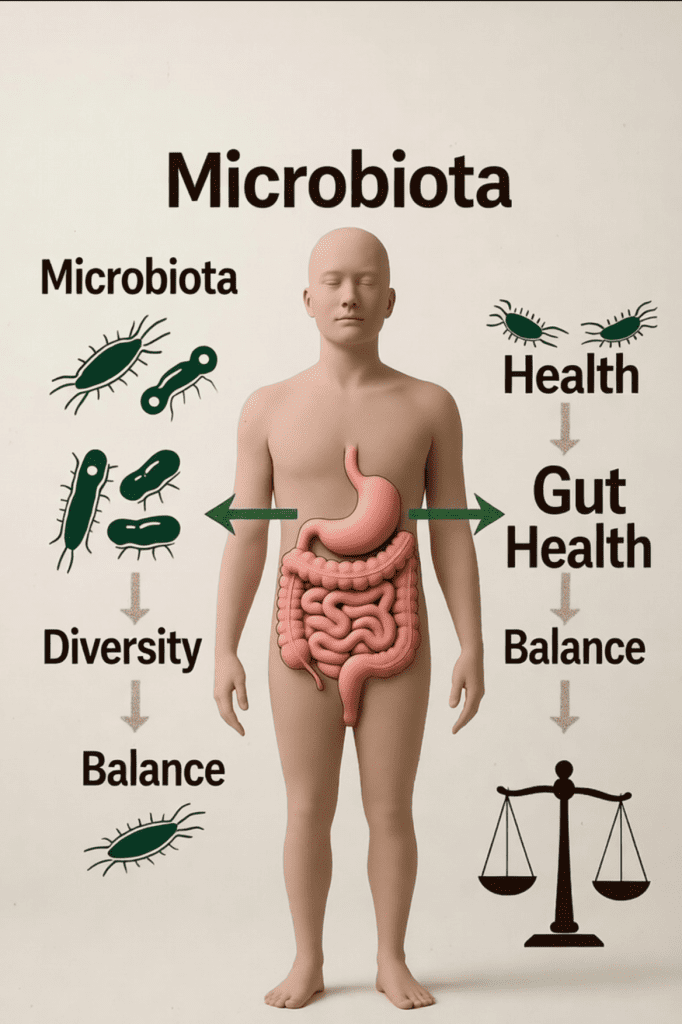
- Use microbiota for composition.
- Use microbiome for functional and genomic context.
The Bioinformatics Perspective
From a computational standpoint, distinguishing these terms defines your pipeline and data outputs:
| Goal | Method | Key Tools |
|---|---|---|
| Identify taxa & diversity | 16S sequencing | QIIME2, DADA2, Phyloseq |
| Explore genes & pathways | Shotgun metagenomics | HUMAnN, MetaPhlAn, MEGAHIT |
| Study expression | Metatranscriptomics | Kraken2, DESeq2, Salmon |
| Analyze metabolites | Metabolomics | GNPS, MZmine |
| Integrate multi-omics | Systems biology | Anvi’o, Phyloseq + KEGG |
Tailoredomics offers custom bioinformatics pipelines for both taxonomic and functional microbiome analysis — designed for research groups working with environmental, clinical, or industrial microbiomes.
Microbiota, Microbiome, and Metagenome — Three Related Terms
To avoid confusion:
- Microbiota → the organisms
- Metagenome → their DNA sequences
- Microbiome → the organisms + genes + environment
All three are connected but represent different analytical layers of microbial ecology.
Microbiome vs Microbiota. Summary Table
| Term | Definition | Focus | Typical Analysis |
|---|---|---|---|
| Microbiota | Living microbial community | Taxonomy | 16S rRNA sequencing |
| Microbiome | Microbes + genes + interactions | Function | Metagenomics |
| Metagenome | Genetic material from a community | Genomics | Shotgun sequencing |
Final Thoughts
Understanding the distinction between microbiome vs microbiota improves the design, interpretation, and communication of microbial research.
- Microbiota tells you who is there.
- Microbiome reveals what they do and how they interact.
At Tailoredomics, we help researchers and institutions extract meaningful insights from complex microbiome datasets — from community composition to metabolic potential. Check out our metagenomics and microbiome profiling services!