Introduction
RNA sequencing (RNA-seq) has become the standard approach for studying gene expression at genome scale. By sequencing RNA molecules from cells or microbial communities, researchers can quantify which genes are active and how their expression changes across conditions.
However, generating RNA-seq data is only the beginning. The real biological insights come from a carefully designed RNA-seq data analysis pipeline, which transforms raw sequencing reads into interpretable results such as differential gene expression and pathway enrichment.
In this guide we walk through the complete RNA-seq data analysis pipeline, from raw FASTQ files to functional interpretation. Whether you are studying microbial transcriptomes, host responses, or environmental samples, understanding each step of the workflow is essential for reliable results.
If you need help implementing an RNA-seq data analysis pipeline, our Transcriptomics Services provide end-to-end support from raw FASTQ files to differential gene expression and pathway analysis.
If you are new to transcriptomics, you may also want to read our introductory guide:
What Is Transcriptomics? How RNA-Seq Reveals What Cells Are Doing
Overview of the RNA-Seq Analysis Pipeline
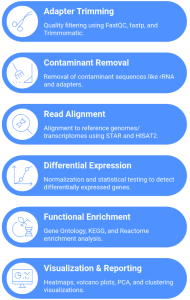
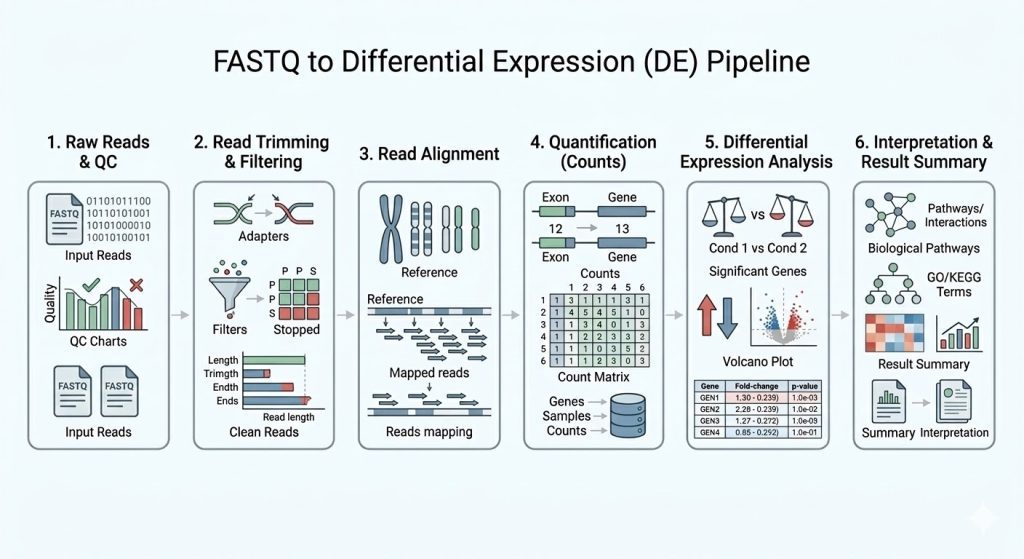
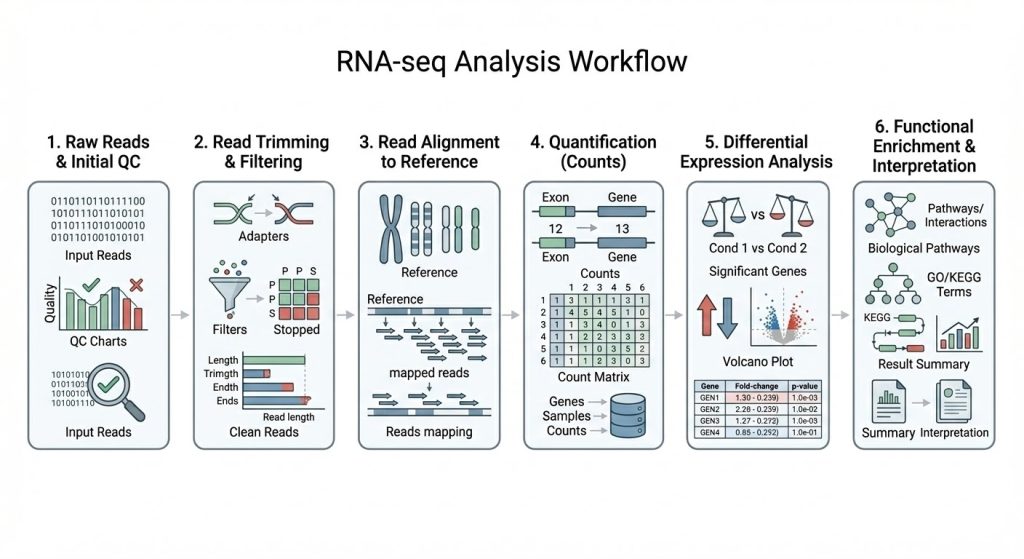
A typical RNA-seq workflow includes several key stages:
- Quality control of raw sequencing reads
- Adapter trimming and filtering
- Read alignment or pseudo-alignment
- Expression quantification
- Normalization and differential gene expression analysis
- Functional enrichment and pathway interpretation
- Visualization and reporting
Each of these steps contributes to ensuring that gene expression measurements are statistically robust and biologically meaningful.
Step 1: Raw Read Quality Control
The first stage of any RNA-seq data analysis pipeline is evaluating the quality of raw sequencing reads.
Sequencing platforms such as Illumina generate large numbers of short reads stored in FASTQ files. These files include both nucleotide sequences and quality scores that indicate the reliability of each base.
Quality control is essential because sequencing runs can introduce artifacts such as:
- adapter contamination
- low-quality bases
- PCR duplicates
- uneven read composition
Common tools for RNA-seq quality control include:
These tools generate reports showing per-base quality scores, GC content distribution, sequence duplication levels, and other diagnostic metrics.
Identifying problems early prevents errors from propagating through the rest of the analysis.
Step 2: Adapter Trimming and Read Filtering
After quality assessment, the next step is cleaning the sequencing reads.
Adapter sequences and low-quality bases must be removed before alignment to ensure accurate mapping to the reference genome or transcriptome.
Typical tasks performed during trimming include:
- removing sequencing adapters
- trimming low-quality read ends
- filtering very short reads
- eliminating ambiguous nucleotides
Popular tools include:
Proper trimming improves downstream mapping efficiency and reduces the risk of false gene expression signals.
Step 3: Read Alignment or Pseudo-Alignment
Once the reads have been cleaned, they must be mapped to a reference genome or transcriptome.
Two main approaches are used in modern RNA-seq pipelines:
Alignment-based methods
These methods align reads directly to the genome while accounting for splice junctions.
Common tools include:
Alignment-based methods provide high accuracy and are commonly used for organisms with well-annotated genomes.
Pseudo-alignment methods
Newer approaches skip full alignment and instead map reads probabilistically to transcript sequences.
Examples include:
Pseudo-alignment is often faster and requires fewer computational resources while still providing reliable expression estimates.
The choice between alignment and pseudo-alignment depends on the organism, sequencing depth, and experimental design.
Step 4: Gene Expression Quantification
After reads are mapped, the next step is converting alignments into gene expression measurements.
This process counts how many sequencing reads correspond to each gene or transcript.
The output is typically an expression matrix, where:
- rows represent genes
- columns represent samples
- values represent read counts or normalized expression levels
Common quantification tools include:
These tools generate raw counts that serve as the input for downstream statistical analysis.
Step 5: Differential Gene Expression Analysis
The most common goal of RNA-seq experiments is identifying genes that change expression across experimental conditions.
This is known as differential gene expression analysis.
Before statistical testing, gene counts must be normalized to account for differences in sequencing depth and library composition.
Popular normalization and statistical analysis tools include:
These methods model count data and estimate statistical significance for expression changes between groups.
The results typically include:
- log2 fold change values
- p-values
- false discovery rate (FDR) corrections
Genes with statistically significant expression changes can then be further investigated for biological relevance.
Step 6: Functional Enrichment and Pathway Analysis
Lists of differentially expressed genes are often difficult to interpret without additional biological context.
Functional enrichment analysis helps identify biological processes and pathways that are overrepresented among the differentially expressed genes.
Common approaches include:
- Gene Ontology (GO) enrichment
- KEGG pathway analysis
- Reactome pathway mapping
Popular tools include:
These analyses reveal which biological functions are activated or suppressed in response to experimental conditions.
For microbial studies, functional annotation may also involve databases such as:
Step 7: Visualization and Interpretation
Visualization is essential for interpreting RNA-seq results and communicating findings effectively.
Common visual outputs include:
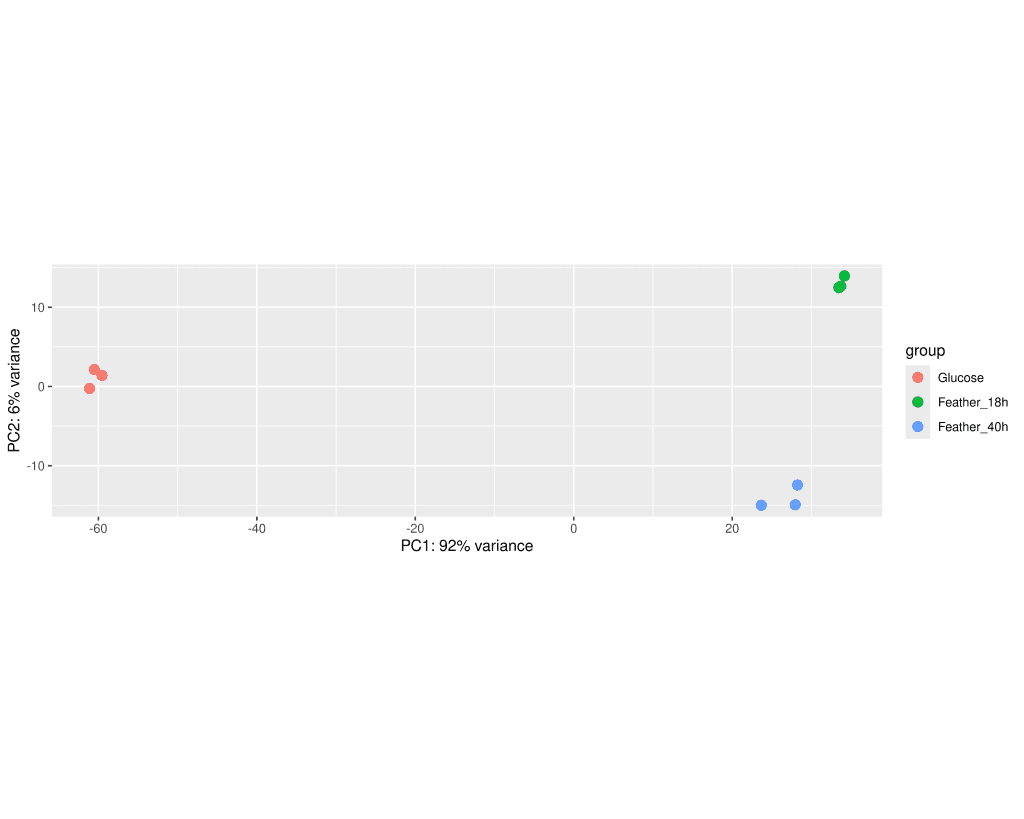
PCA plots
Principal component analysis helps assess sample clustering and detect batch effects.
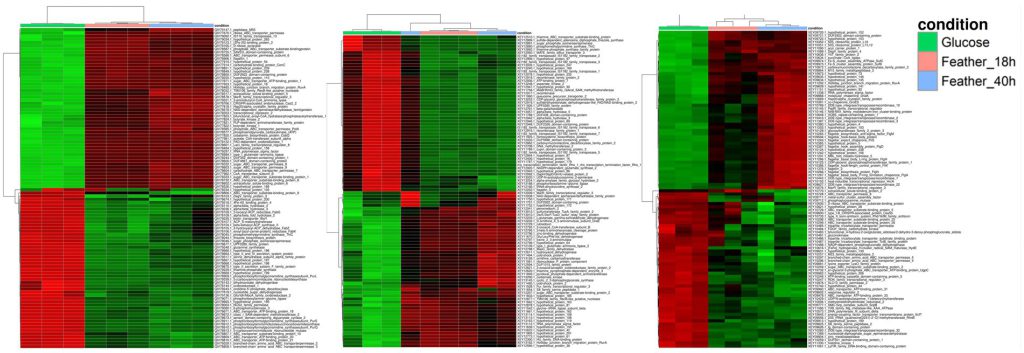
Heatmaps
Heatmaps display expression patterns of key genes across samples.
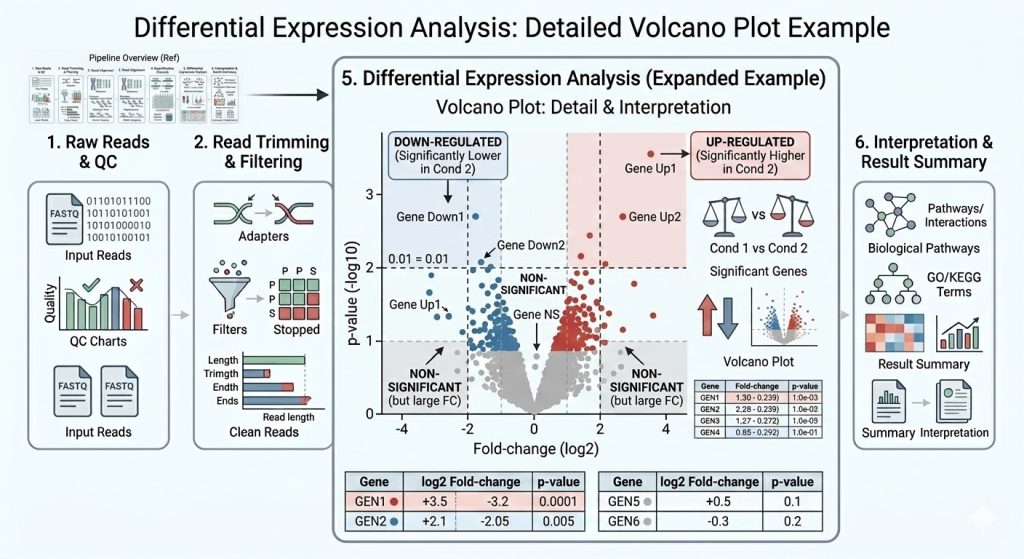
Volcano plots
Volcano plots highlight genes with both large fold changes and strong statistical significance.
MA plots
MA plots visualize the relationship between expression magnitude and fold change.
Together, these visualizations provide an intuitive overview of transcriptional responses across conditions.
Special Considerations for Microbial Transcriptomics
RNA-seq pipelines often require adjustments when analyzing microbial transcriptomes.
For example:
- bacterial genomes lack introns, simplifying alignment
- rRNA contamination may need to be removed
- operon structures influence gene expression interpretation
Additionally, microbial transcriptomics experiments often investigate conditions such as:
- antibiotic stress
- nutrient limitation
- host-microbe interactions
- environmental adaptation
Combining RNA-seq data with other omics approaches, such as metagenomics or microbial genomics, can provide deeper insights into microbial biology.
Common Pitfalls in RNA-Seq Data Analysis
Despite the maturity of RNA-seq technology, several pitfalls can affect results.
Common mistakes include:
Insufficient biological replicates
At least three biological replicates per condition are recommended for reliable statistical inference.
Ignoring batch effects
Sequencing runs performed at different times can introduce technical variability.
Inadequate normalization
Improper normalization can lead to false differential expression signals.
Over-interpretation of small datasets
Statistical significance should always be interpreted alongside biological relevance.
Careful experimental design and rigorous bioinformatics workflows help minimize these risks.
When to Use Professional RNA-Seq Analysis Services
RNA-seq data analysis requires expertise in both statistics and bioinformatics.
Many research groups generate sequencing data but lack the computational infrastructure or specialized knowledge required to analyze it effectively.
Professional RNA-seq analysis services can assist with:
- building reproducible analysis pipelines
- handling large sequencing datasets
- performing differential gene expression analysis
- interpreting biological results
At Tailoredomics, our Transcriptomics Services provide end-to-end RNA-seq data analysis—from raw FASTQ files to publication-ready figures and reports.
Related Resources
For a broader introduction to transcriptomics, see our guide What Is Transcriptomics?. If you need expert support, explore our Transcriptomics Services. You can also compare RNA-seq with other omics approaches in our article on What Is Metagenomics?.
Final Thoughts
RNA-seq has revolutionized the study of gene expression across organisms, from bacteria to complex eukaryotes.
A well-designed RNA-seq data analysis pipeline ensures that sequencing data are processed accurately and interpreted correctly. From quality control and alignment to differential gene expression and pathway enrichment, each step plays a crucial role in uncovering meaningful biological insights.
As sequencing technologies continue to evolve, RNA-seq will remain a cornerstone of functional genomics and microbial systems biology.